Jaipur is not a city you understand in an afternoon. It rewards patience, early mornings, and the willingness to step off the main tourist routes into the lanes and bazaars where the city's real life happens. This two-day itinerary is designed for first-time visitors who want to see the essential monuments without missing the city's craft heritage, culinary culture, and living history. It is ambitious but entirely manageable if you move with purpose.
Day 1 — The Pink City and its palaces
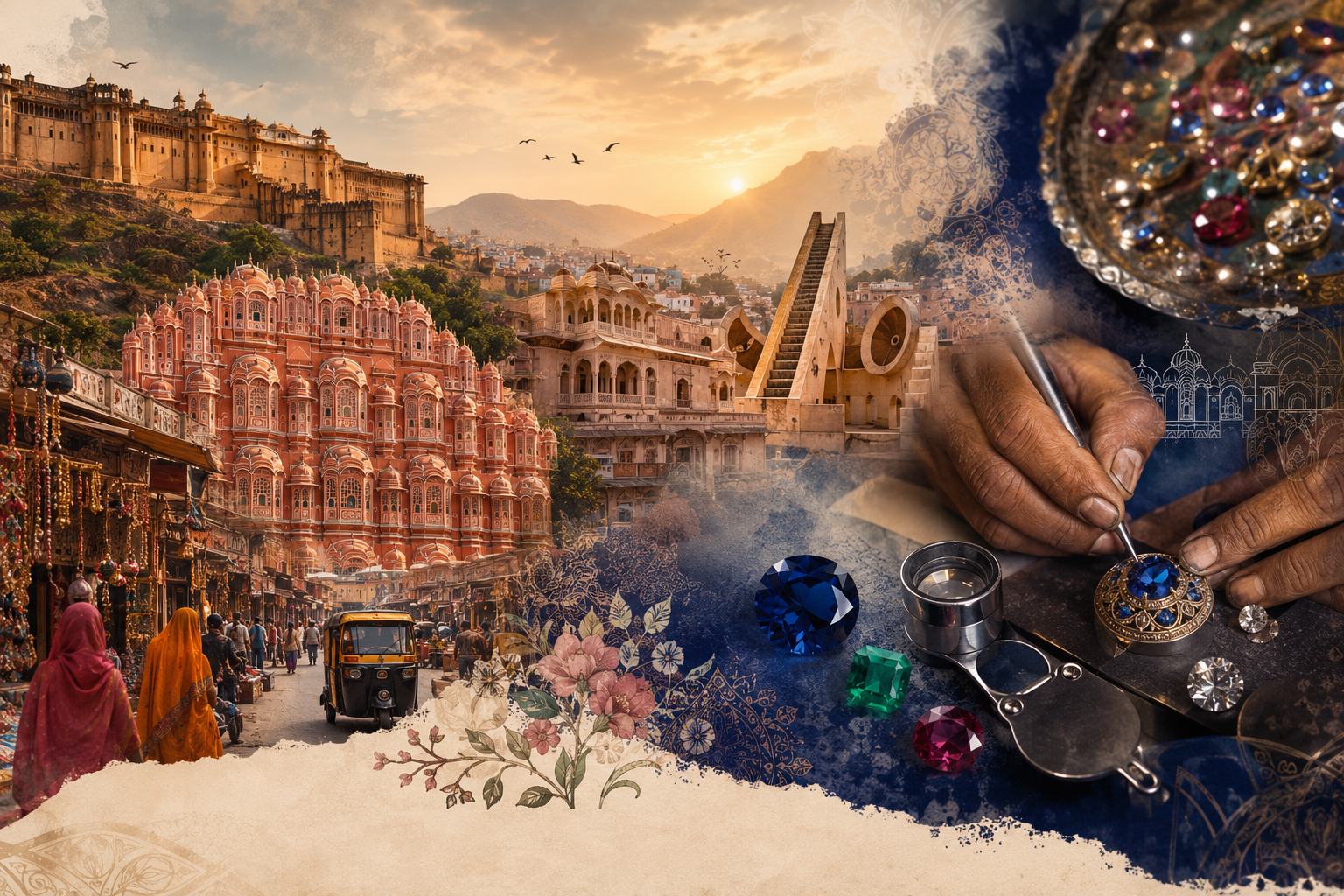
Start early. Jaipur's most famous monuments are best experienced before the heat and the crowds arrive, which means being at the Amber Fort by 8am. The fort is a 45-minute drive or auto-rickshaw ride from the city centre, and it is worth every minute of the journey. The complex — begun in the 10th century and expanded by successive Rajput rulers — is larger and more intricate than most visitors expect. Allow at least two hours to explore the Sheesh Mahal (the mirrored palace), the Diwan-i-Khas, and the views down over the lake and the hills.
Practical note Hire a guide at the fort entrance rather than relying on audio guides alone — the context of a knowledgeable local transforms what might otherwise be a series of impressive but bewildering rooms into a coherent narrative.
Return to the city for mid-morning and make your way to the City Palace — the seat of the Jaipur royal family, parts of which are still their private residence. The palace museum holds an extraordinary collection of textiles, weapons, manuscripts, and objets d'art accumulated over three centuries of Rajput rule. The Mubarak Mahal, built for receiving foreign dignitaries, contains one of the finest collections of historic Indian textiles in the country.
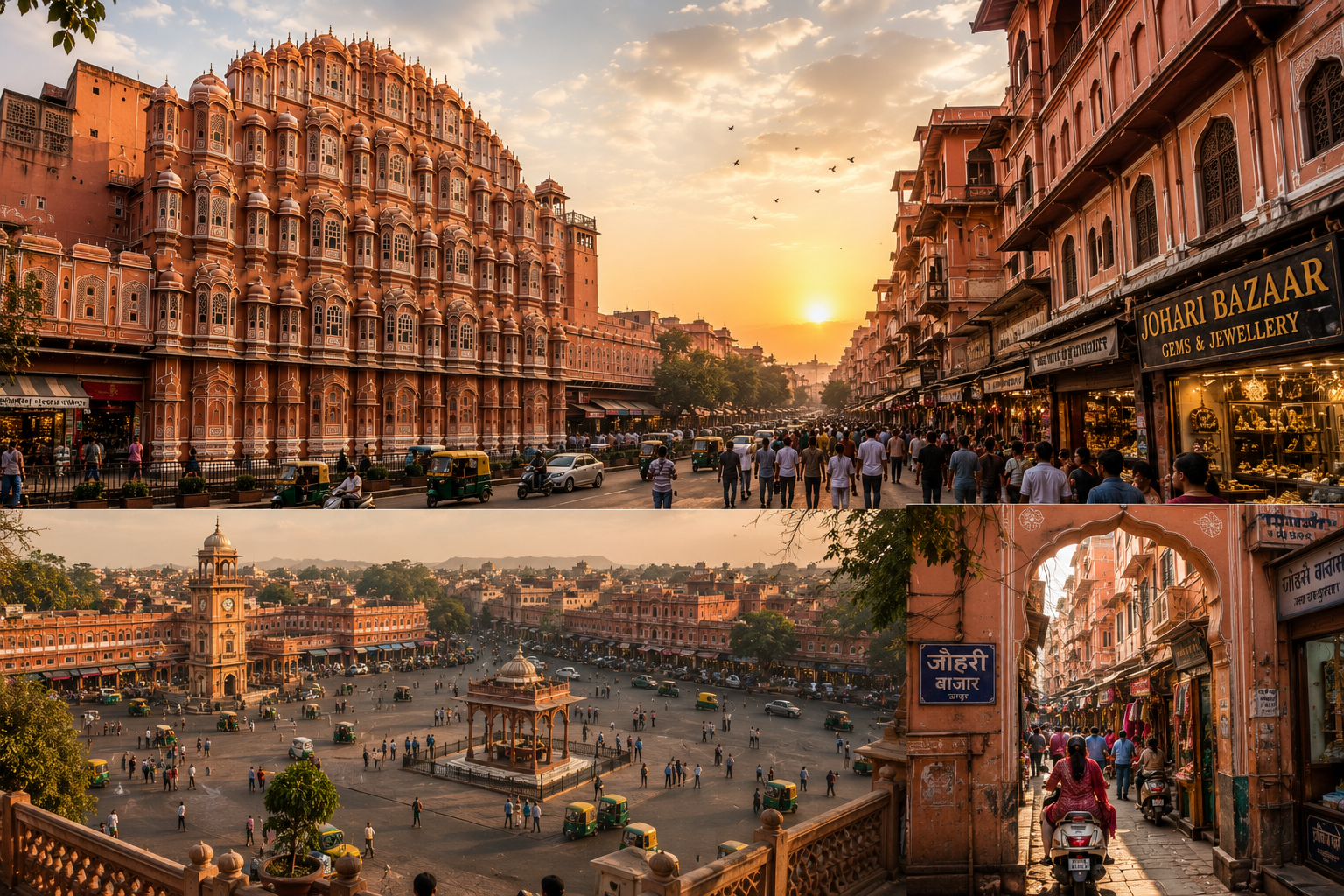
After the City Palace, walk to the Hawa Mahal — the five-storey honeycombed facade that is Jaipur's most photographed landmark. The interior is less dramatic than the exterior suggests, but the views from the upper windows over the street below are worth the climb. Late morning light on the facade is excellent for photography.
Lunch in the old city. Lassiwala on MI Road is the most famous lassi stop in Jaipur, and the queue moves faster than it looks. For a proper meal, seek out one of the thali restaurants in the lanes around Johari Bazaar — the Rajasthani thali, with its dal baati churma, gatte ki sabzi, and ker sangri, is among the most distinctive regional cuisines in India.
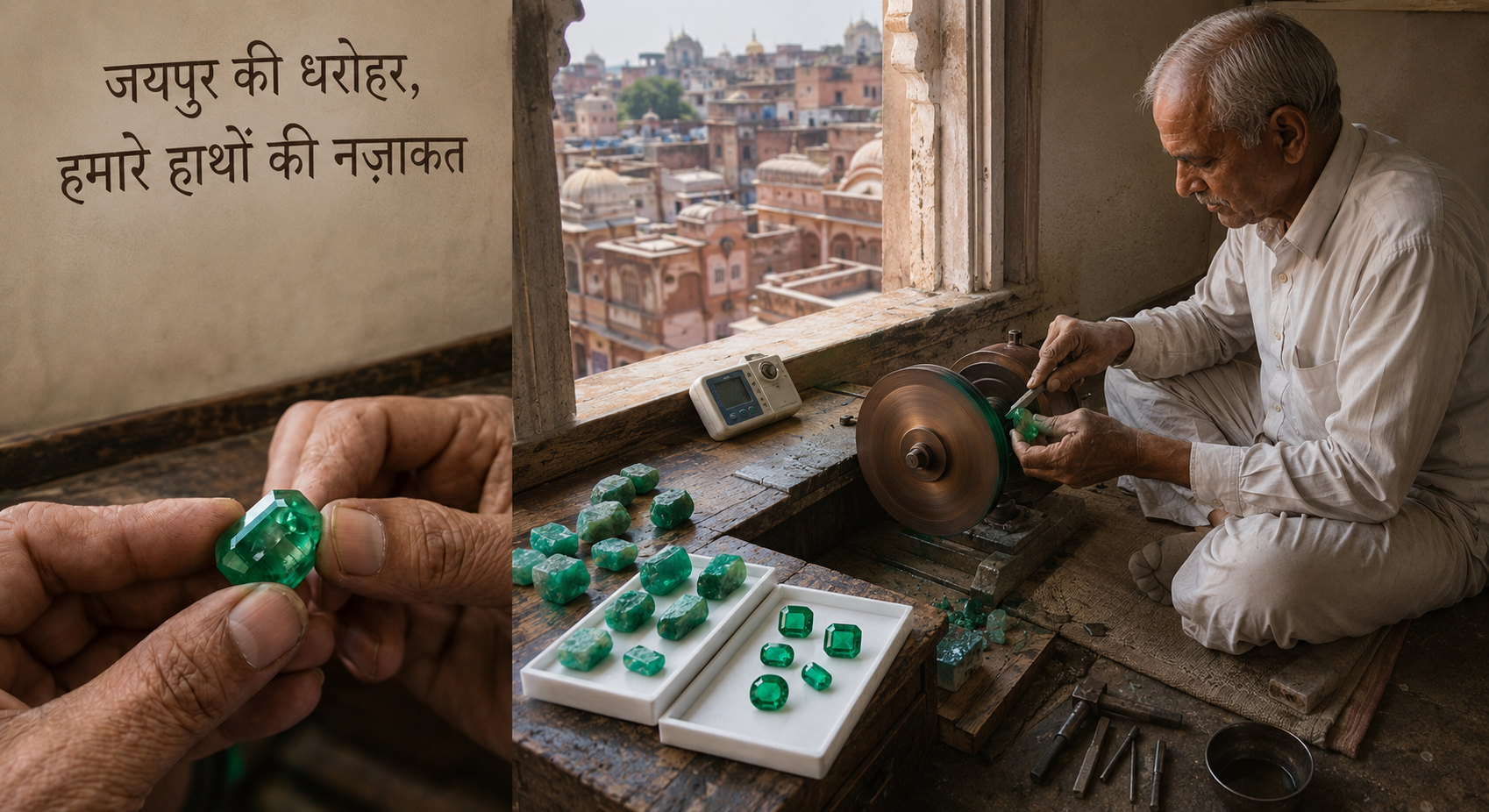
Spend the afternoon in the bazaars. Johari Bazaar itself is the jewellery quarter and worth walking slowly — not necessarily to buy, but to observe. The shops of established gem dealers with their carefully lit display cases occupy the ground floors of centuries-old havelis. In the lanes behind, you can sometimes catch a glimpse of craftsmen at work. Bapu Bazaar runs parallel and is the place for block-printed textiles, mojari shoes, and Rajasthani handicrafts.
End the day at Nahargarh Fort, above the city, for the sunset. The drive up takes twenty minutes and the views over Jaipur at dusk — the pink buildings fading to ochre in the evening light — are among the most satisfying urban panoramas in India.
Day 2 — Craft, gemstones, and the living city
Day two is for going deeper. Begin the morning at the Jantar Mantar — the open-air astronomical observatory built by Maharaja Jai Singh II in the 1720s. It is UNESCO-listed and genuinely extraordinary: nineteen mathematical instruments, some as tall as a four-storey building, built to measure time, track stars, and predict eclipses with an accuracy that astonishes contemporary astronomers. Allow an hour.
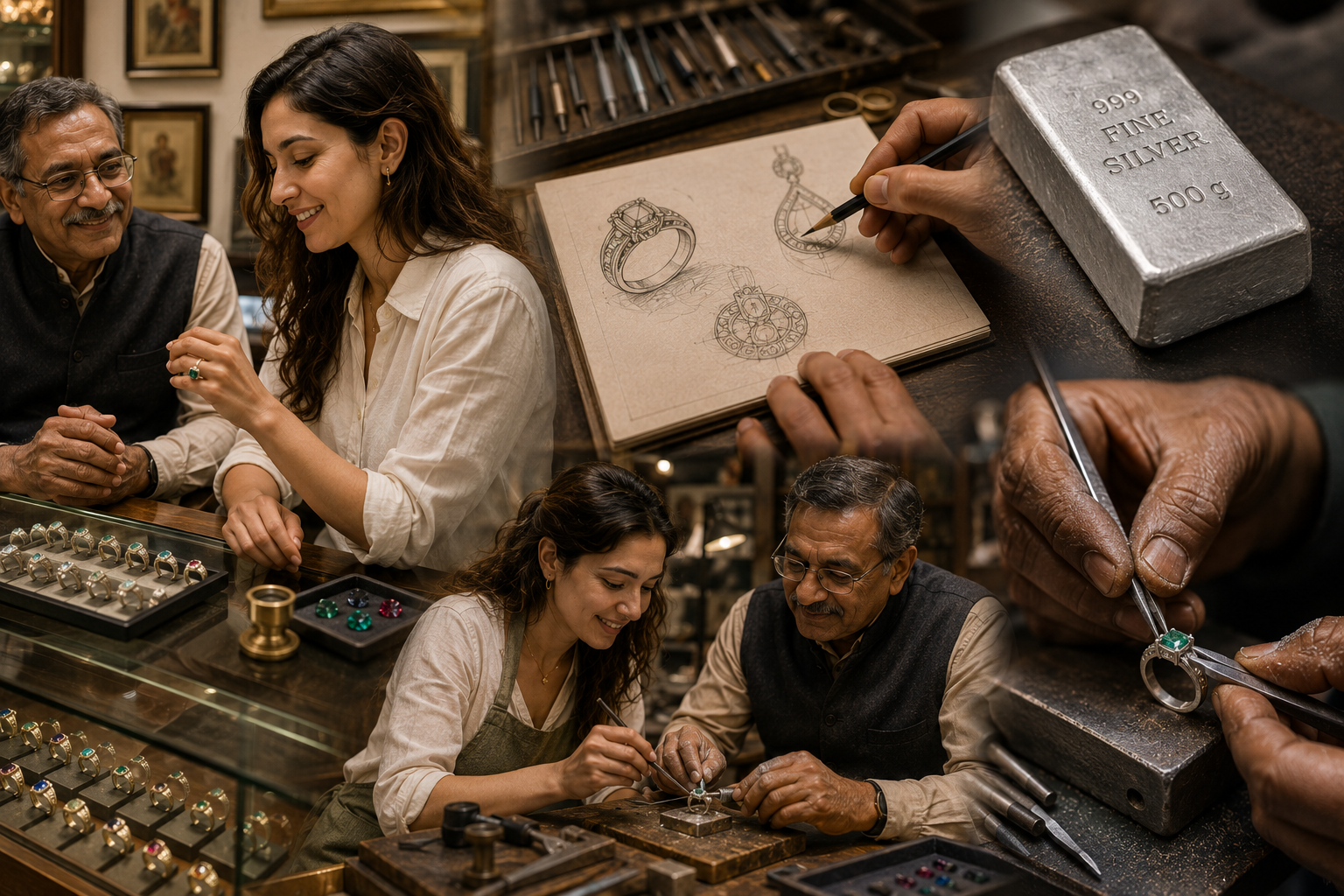
From Jantar Mantar, walk directly into Johari Bazaar for your jewellery making session at the Atelier. Timing the session mid-morning means you arrive when the workshop is at its best — the artisans settled into their day, the light in the studio clear, enough time remaining in the afternoon for whatever comes next. The two-hour session covers the history of Jaipur's gem trade, the design of your piece, hands-on crafting at the bench, and a final feedback conversation with the master artisan. You leave with a finished piece and a significantly different understanding of the city around you.
Timing the jewellery session mid-morning on day two means you arrive informed — the monuments of day one have given you the context that makes the craft heritage land differently.
Lunch after the session in the Johari Bazaar area. The neighbourhood has several good options for a relaxed midday meal — the session appetite is real, and the post-making conversation tends to continue over food.
The afternoon is for the things first-time visitors often miss. The Albert Hall Museum in Ram Niwas Garden holds a remarkable collection of decorative arts, miniature paintings, and natural history exhibits in a beautiful Indo-Saracenic building. It is cooler inside than anywhere else in the city and worth an hour of quiet exploration.
If shopping is on your agenda, the afternoon is the time for it. For textiles, Anokhi on Prithviraj Road is the most reliable source of high-quality block-printed cotton at fair prices — their quality control is consistent in a way that bazaar shopping is not. For jewellery, the dealers around Johari Bazaar are most responsive to considered buyers in the afternoon, when the morning tourist rush has subsided.
Before you leave Ask at your hotel or at the Atelier about the current status of Jaipur's craft villages — Sanganer for block printing, Bagru for resist dyeing, Sanganer for blue pottery. Day trips to these communities offer a completely different register of the city's artisan culture.
Getting around
Auto-rickshaws remain the most efficient way to navigate Jaipur's old city — they negotiate the narrow lanes that taxis cannot. Agree on the price before you get in, or use the Ola or Uber apps which operate in Jaipur and remove the negotiation entirely. For the Amber Fort and Nahargarh, a hired taxi or driver for a half-day is more comfortable and only marginally more expensive than multiple auto journeys.
When to visit
October to February is the ideal window — days are warm and clear, evenings genuinely cool. March brings the Holi festival, which is celebrated in Jaipur with particular exuberance and is worth planning around if you enjoy crowds and colour. April to June is hot in a way that demands respect — the city functions, but outdoor exploration requires early mornings and late afternoons. The monsoon from July to September is underrated: the desert landscape turns briefly green, the light is extraordinary, and the tourist crowds thin to almost nothing.
However long you have in Jaipur, leave the monuments and come into the bazaars. Leave the bazaars and come into the workshops. The city reveals itself in layers, and the most memorable one — the one that stays — is the layer where things are still being made by hand, in the same lanes, by the same family of craftsmen, as they have been for three hundred years.